
Eleanor’s work is shaped by a slow and attentive approach to making, where time, seasonality, and material are allowed to guide the outcome. Rooted in natural dyeing and hand processes, each piece reflects a dialogue between intention and what the materials themselves offer.
The Process
Much of the colour in Eleanor’s work begins in the garden. Dye plants are grown from seed and tended throughout the year, forming an evolving dye garden that has been developed over time. What she is able to dye with is guided by what she has successfully grown — making each season’s palette both limited and distinct.
Working across her outdoor space, plants are grown within garden borders, dedicated planters, and a small grow house positioned to make the most of available light. From fresh blooms to dried petals and leaves, materials are gathered, stored, and revisited as the seasons shift.
Alongside this, she works with foraged materials, food waste, and surplus flowers from local growers, extending the life of botanical matter that might otherwise go to waste.
Her practice has been further shaped by time spent in Guatemala, where she visited a natural dye garden run by a women’s cooperative near Lake Atitlán. There, she developed a deeper understanding of plant-based colour and the use of natural mordants, knowledge that continues to inform both her dye garden and studio practice.
The Garden & Materials

Techniques
A combination of traditional techniques and intuitive experimentation underpins the work.
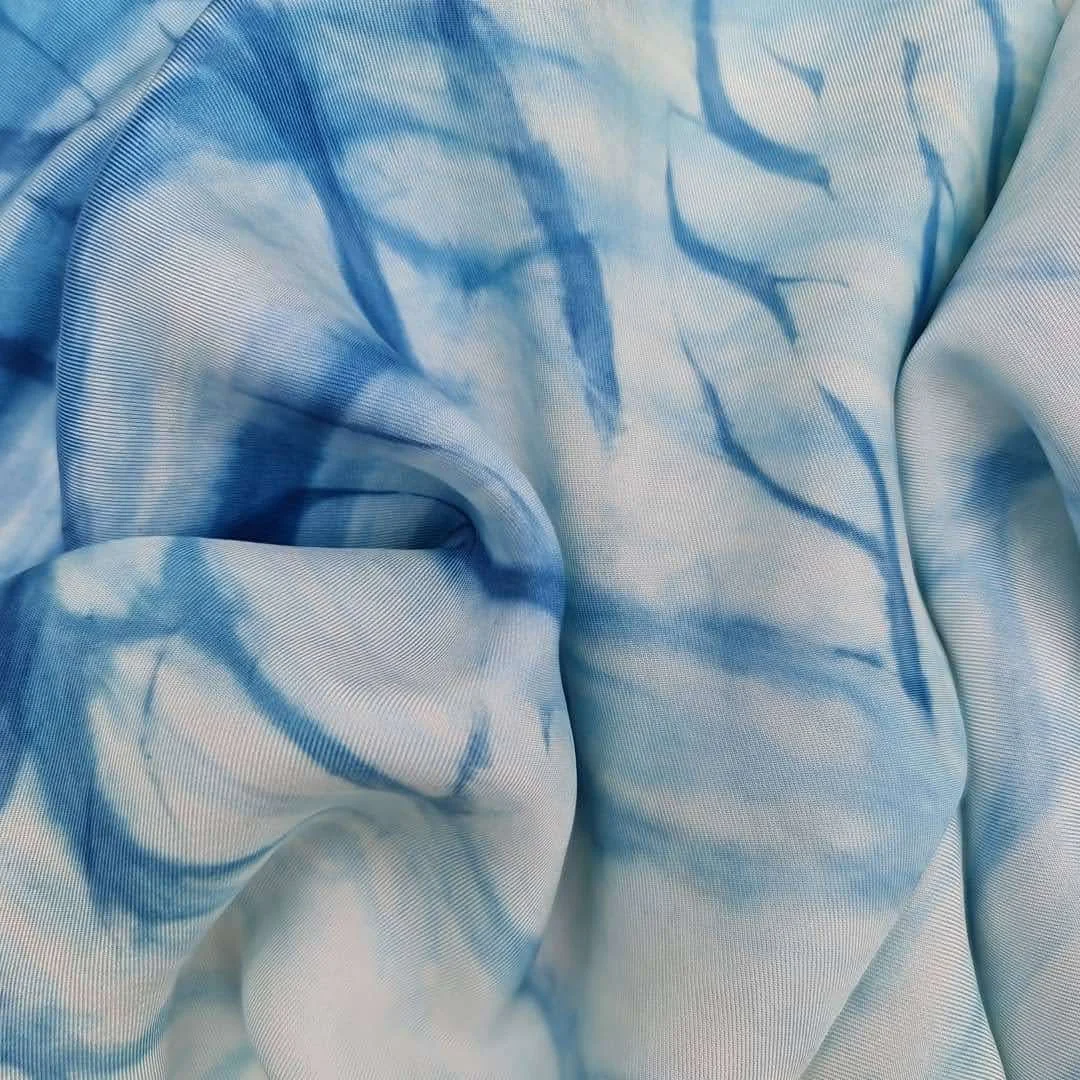
Tataki Zome (flower pounding) is used to transfer the direct imprint of plants onto cloth, capturing both colour and form. Shibori resist-dyeing introduces structure and pattern through folding, binding, and stitched resist methods, shaping the fabric before immersion in dye. Hand stitching, including Sashiko, is often used to reinforce, repair, and add quiet detail to finished pieces.
Alongside these techniques, Eleanor continues to develop her own methods through ongoing experimentation, allowing each process to evolve over time.
Natural Dye & Sustainability
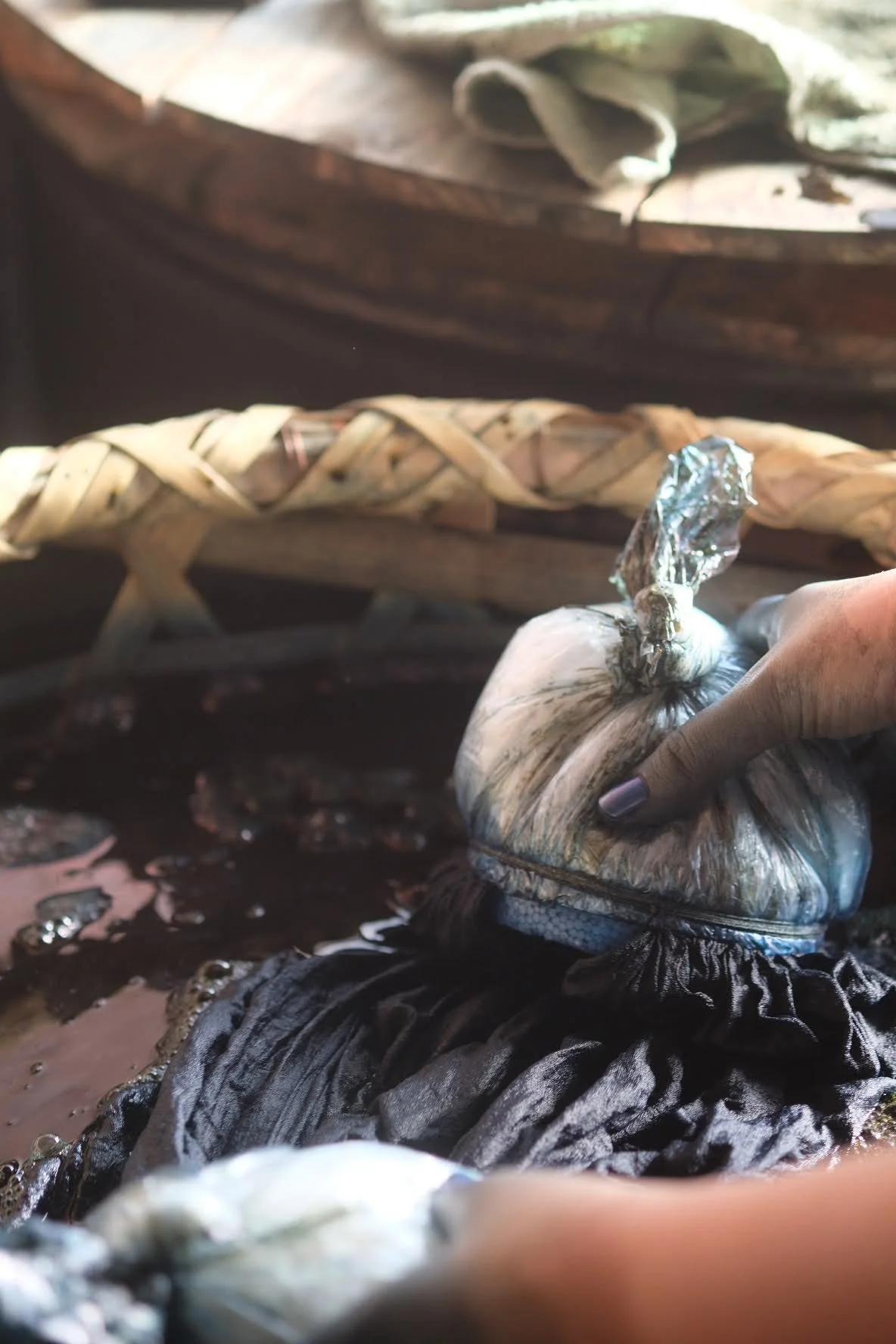
Natural dyeing sits at the core of the practice — not only for the quality of colour it produces, but for its connection to a more considered way of making. Working with plant-based dyes offers an alternative to the synthetic, chemical-heavy processes widely used in industrial textile production.
Where possible, natural mordants are used, alongside a careful approach to minimising chemical use without compromising the longevity and colourfastness of the cloth. This balance allows the work to remain both environmentally conscious and functional.
Materials are sourced with care, with a preference for vintage and second-hand fabrics, and reclaimed or antique bases for upholstered pieces. Wherever possible, low-energy and low-water methods are used, supporting a slower, more sustainable approach to textile creation.